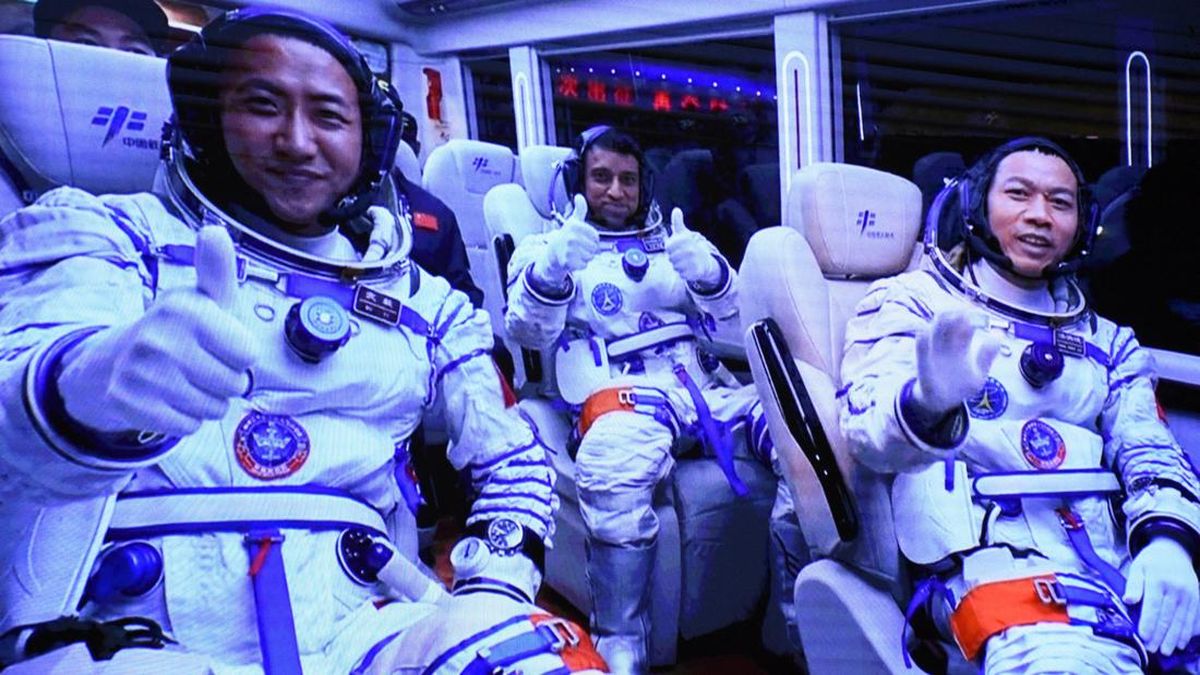
JIUQUAN / ISLAMABADChina launched its crewed Shenzhou-24 spacecraft atop a Long March-2F rocket from the Jiuquan Satellite Launch Centre at 08:18 local time (00:18 GMT) on Wednesday (Nov 25), carrying Pakistan Air Force pilot Muhammad Zeeshan Ali as Pakistan's first astronaut in orbit and the first foreign astronaut to board the Tiangong space station.
What experiments will Pakistan's astronaut run on Tiangong?
Ali, 40, will conduct experiments on bacterial photosynthesis and how space radiation and microgravity affect plant seeds during a brief five-to-ten-day stay before returning to Earth aboard Shenzhou-23 with outgoing crew members Lai Ka-ying and Zhang Zhiyuan. Meanwhile, Shenzhou-24 commander Tang Hongbo, 51, and flight engineer Wu Yi will remain six months alongside Zhu Yangzhu, 40, who is completing China's first full-year orbital endurance mission studying aerospace medicine, combustion, and age-related vascular disease.
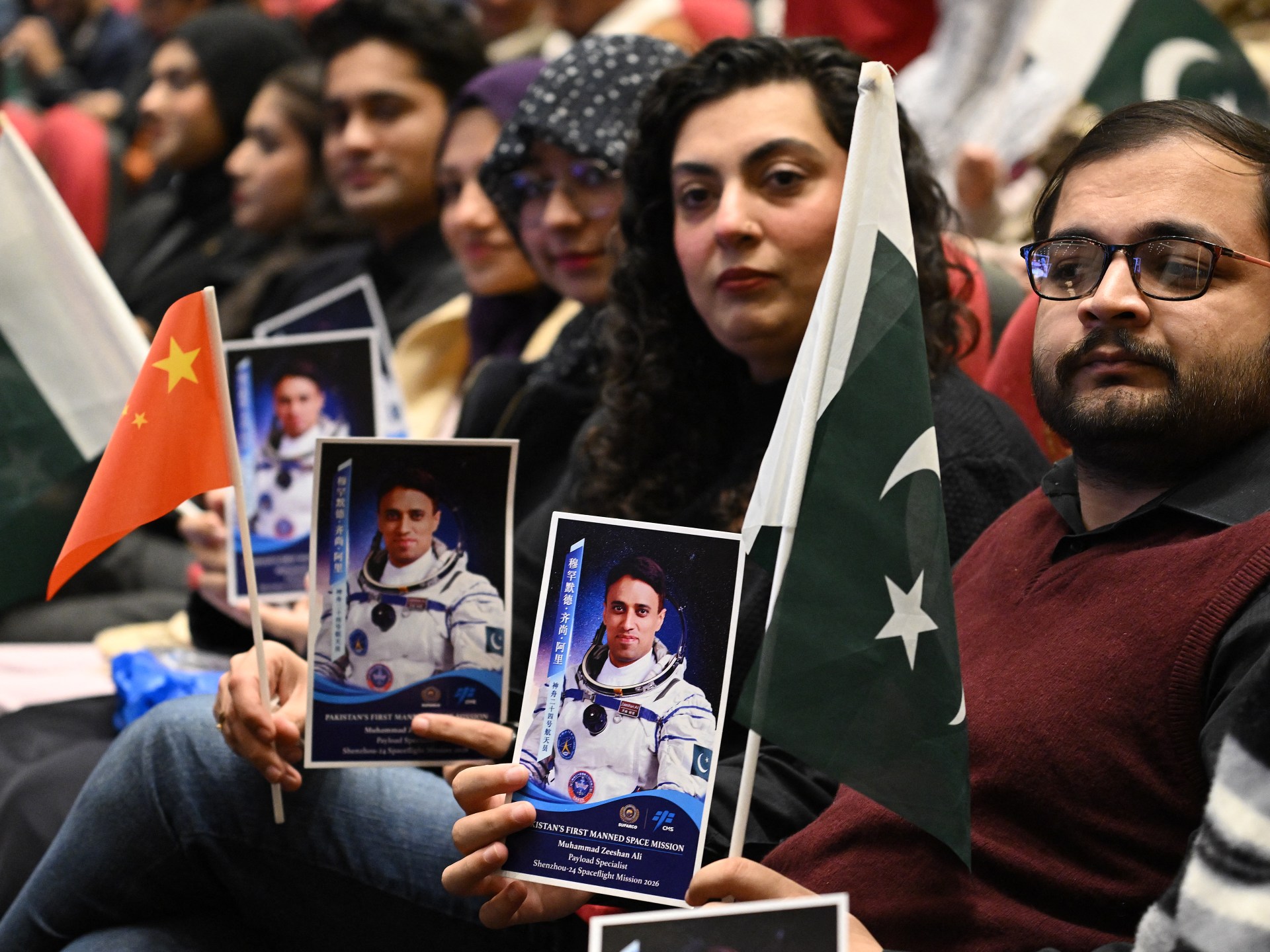
China Manned Space Agency (CMSA) spokesperson Zhang Jingbo confirmed the crew and station systems operated normally as the Gobi Desert launch was declared a complete success minutes after liftoff. Ali, who trained for months in China alongside fellow finalist Khurram Dawood and learned Mandarin, said he carries the dreams of 240 to 250 million Pakistanis, earning praise from Pakistani Prime Minister Shehbaz Sharif and Chinese President Xi Jinping.
China and US race toward crewed lunar missions by 2030
Excluded from the International Space Station since 2011 under US restrictions on NASA cooperation with Beijing, China has invested billions into Tiangong's six-month crew rotations and achieved its first reusable rocket landing in July. Beijing aims to land astronauts on the Moon by 2030 and build a joint lunar research base with Russia by 2035, competing directly with the US Artemis program targeting a 2028 crewed lunar return.

Diplomatically, Foreign Ministry spokesperson Guo Jiakun hailed the flight as proof of reliable strategic ties as China markets Tiangong as an open international research hub rather than an exclusive domestic outpost. For Pakistan, which lacks an indigenous crewed spacecraft, the mission celebrating 75 years of ties delivers immediate orbital science access under Chinese supervision.
What does China's open Tiangong model mean for Indonesia?
For Indonesia and fellow emerging spacefaring nations in Asia, Shenzhou-24 illustrates how bilateral astronaut-training and payload-specialist agreements can unlock microgravity agriculture and biomedical research without building billion-dollar crewed launch systems from scratch. At the same time, it highlights a widening bifurcation in global orbital partnerships between US-led Artemis alliances and Beijing's Tiangong network.