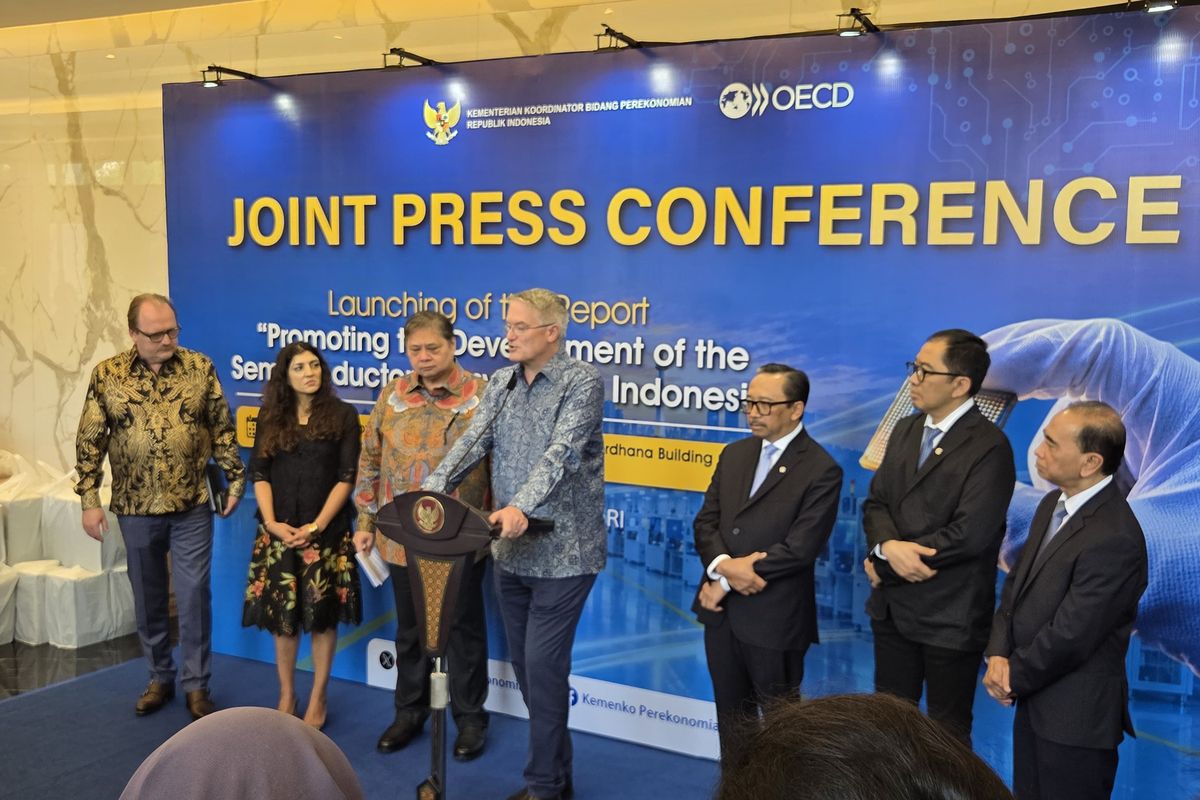
JAKARTAThe Organisation for Economic Co-operation and Development (OECD) has identified five structural bottlenecks Indonesia must resolve to capture a larger share of the global semiconductor supply chain, projected to reach US$1 trillion by 2030. OECD Secretary-General Mathias Cormann presented the report, Promoting the Development of the Semiconductor Ecosystem in Indonesia, to Coordinating Economic Minister Airlangga Hartarto in Jakarta on Wednesday (Nov 25).
What import and local-content hurdles did the OECD flag?
First, the OECD urged Jakarta to replace aspirational goals with predictable industrial policy focused initially on labor-intensive assembly, testing, and packaging (ATP), backed by stronger coordination under the 2024 Semiconductor Task Force. Second, Cormann warned that import licensing and Indonesia's commodity balance system—expanded to over 3,800 products in late 2023—created costly delays that stalled roughly 26,000 containers at major ports in 2024, threatening an electronics sector that relies on foreign inputs for over one-third of its export value.
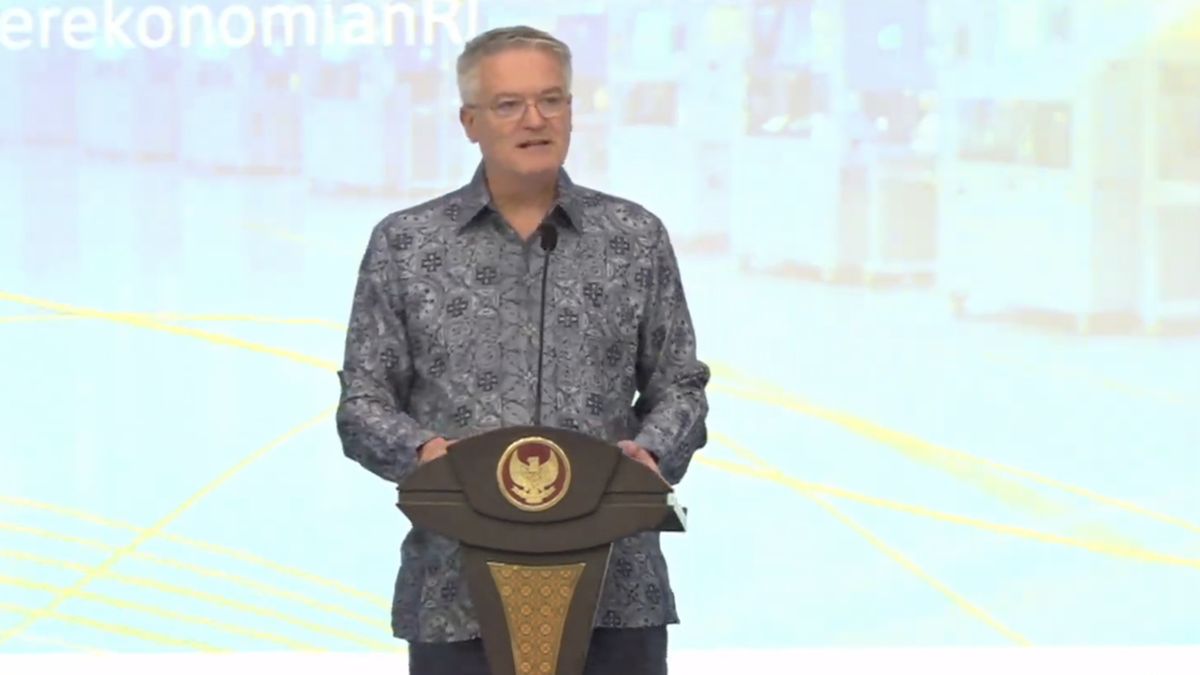
The report also advised simplifying import controls and continuously reviewing local-content (TKDN) rules to keep specialized chip inputs flowing smoothly. Responding to the recommendations, Airlangga noted that most of Indonesia's semiconductor plants already operate inside free trade zones aligned with TKDN flexibility, adding that Jakarta is prioritizing chip-design talent so Indonesia does not remain merely a consumer market amid booming AI and data center demand.
Batam talent, renewable power, and chip-fab water constraints
On workforce and infrastructure, the OECD highlighted Batam's pool of 250,000 manufacturing workers—alongside Politeknik Negeri Batam's 60-technician training program with Infineon and a partnership with Arm Holdings to train 15,000 chip-design engineers—while stressing stronger foundational math and science education. Yet Batam faces recurring power outages requiring a Batam-Bintan-Sumatra renewable grid link, plus tight water supplies from six rain-fed reservoirs where a single modern fabrication plant could consume up to 16 percent of the island's water.

Fifth, the OECD flagged weak corporate R&D uptake after surveys showed fewer than 3 percent of Indonesian manufacturers introduced process innovations over a three-year period. Although Indonesia offers a 300 percent R&D tax super-deduction, nationwide tax savings totaled just Rp3 billion in 2024 compared with Rp6.3 trillion granted through priority-industry tax holidays.
Indonesia's 80% OECD accession milestone and 2030 digital outlook
Alongside the chip roadmap, Airlangga confirmed Indonesia's OECD accession has reached roughly 80 percent across 25 policy committees since submitting its Initial Memorandum in June 2025, keeping Jakarta on pace for full membership by 2028. Addressing the five hurdles will determine whether Indonesia maximizes a digital economy forecast to grow from US$180 billion to US$400 billion by 2030 while sustaining the 5.8 percent annual growth the OECD says is needed for high-income status by 2045.