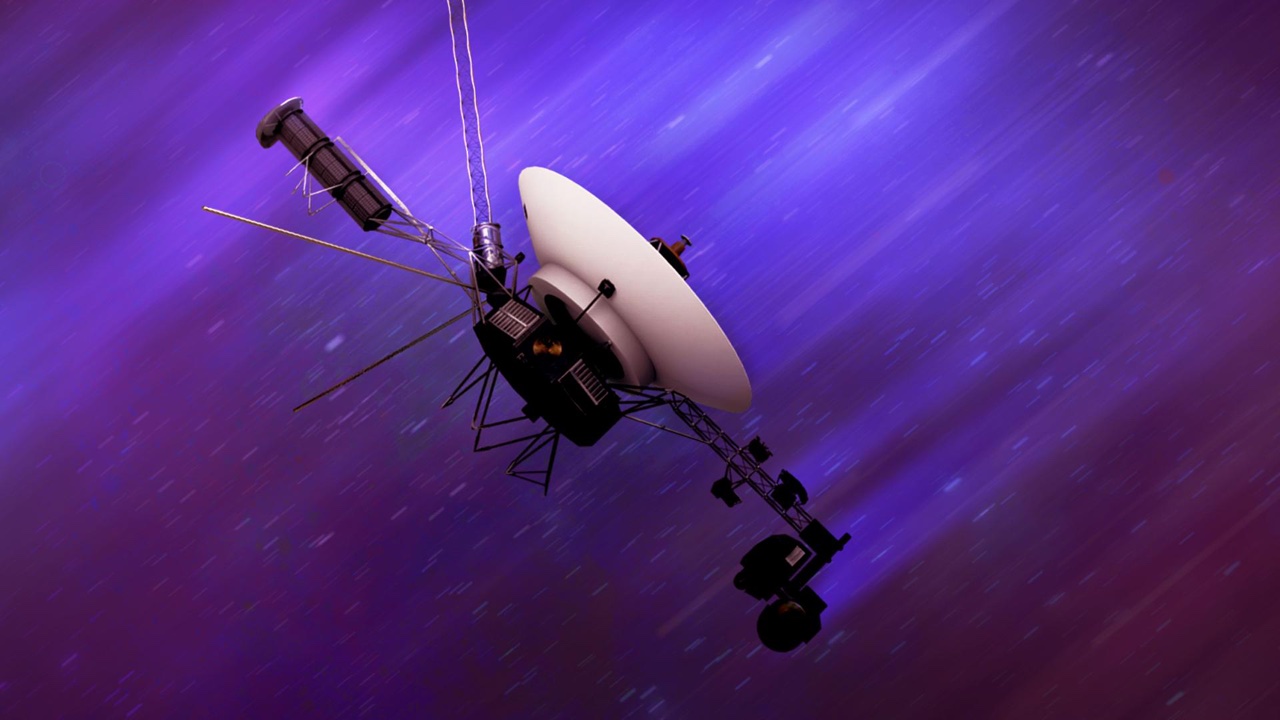
PASADENANASA's Voyager 1 spacecraft became the first human-made object to reach one light-day from Earth on Wednesday (Nov. 18, 2026) at 5:16:07 a.m. EST (10:16:07 UTC). Located roughly 16 billion miles (about 26 billion kilometers) away, the veteran probe crossed the landmark 49 years, two months, and 11 days after lifting off in September 1977.
A light-day is the distance light and radio waves cover in 24 hours traveling at roughly 186,000 miles per second. Cruising at nearly 38,000 mph through interstellar space since exiting the sun's protective heliosphere in 2012, Voyager 1 is headed toward the star AC +79 3888 (Gliese 445) more than 17 light-years away, projected to pass within 1.7 light-years in about 40,000 years.
Why does talking to Voyager 1 now take 48 hours?
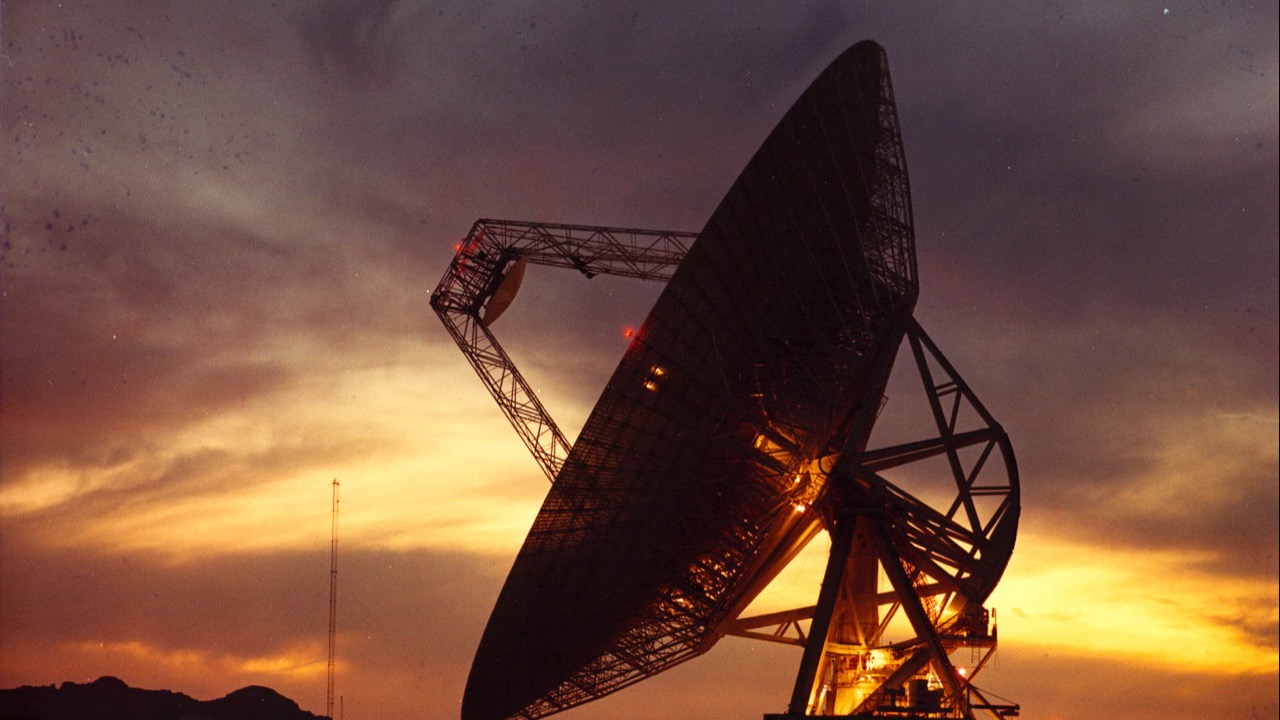
Communicating with Voyager 1 now takes 48 hours round-trip because radio commands transmitted from NASA's Deep Space Network antennas require 24 hours to reach the probe, followed by another 24 hours for any telemetry reply to return to Earth. Voyager mission manager Kareem Badaruddin at NASA's Jet Propulsion Laboratory likened the lag to a phone call stretched across two full days under ideal conditions.
University of Iowa research scientist William Kurth, who joined the mission in 1974 and leads its plasma wave investigation, said operating a remote spacecraft with a two-day turnaround demands an entirely different operational mindset. That fragility surfaced in October when engineers briefly lost contact with Voyager 1 for two days, prompting concern that the probe had gone silent.

How has Voyager 1 stayed powered for nearly 50 years?
Voyager 1 has outlasted its original five-year planetary mission nearly tenfold because it runs on three plutonium-powered radioisotope thermoelectric generators rather than sunlight-dependent solar panels. Because the radioactive fuel naturally decays and hardware ages, electrical output drops by roughly 4 watts per year, leaving the probe with about 210 watts compared with 470 watts at launch.
Its twin spacecraft, Voyager 2, charted a separate trajectory past Uranus and Neptune before entering interstellar space in 2018 and is not expected to reach one light-day from Earth until November 2035. Alongside daily readings on magnetic fields, dust, and galactic cosmic rays, Voyager 1 famously captured the 1990 Pale Blue Dot portrait and carries the Golden Record audio-visual time capsule.
Why Voyager 1's interstellar milestone still matters
Pushing nearly half a century of engineering to 26 billion kilometers gives astrophysicists their only direct measurements of interstellar conditions outside the solar wind bubble, which NASA project manager Suzanne Dodd likened to deep-space weather monitoring. Those continuous cosmic-ray and magnetic observations refine space-environment models critical for safeguarding modern communications and Earth-observation satellites worldwide, including across equatorial nations such as Indonesia.